Ellen Editorial Team
A kitchen with white stone and dark veining can create a striking appearance without relying on bright colors. However, achieving a balanced design requires more than choosing a dramatic slab. Cabinet finishes, lighting, backsplash patterns, and hardware all influence how the stone looks in the room. We should study these elements together before making decisions. When the details work well, a contrasting countertop can provide visual interest while keeping the kitchen comfortable and practical.
Why Black-Veined White Granite Stands Out
White granite with dark veining can provide a bold natural surface. Its lighter background may help create an open appearance, while the darker mineral patterns introduce contrast. However, each natural slab has its own movement and color distribution.
Choosing white granite countertops with black veins requires examining the actual stone rather than relying only on photographs. Some slabs feature fine dark movement, while others show more dramatic patterns. Therefore, the right choice depends on the surrounding kitchen materials. For homeowners in Columbus, Ohio, United States, comparing full slabs with cabinet samples can help identify a combination that suits both modern and traditional interiors.
Build the Design Around the Countertop
A heavily patterned countertop often becomes the kitchen’s main visual feature. Therefore, other finishes should support the stone rather than compete with it. However, a bold granite slab does not require every cabinet or wall to be plain white. Different combinations can create a balanced look when undertones and proportions work together.
Understand Pattern Strength
Fine black veins can create subtle movement. Meanwhile, large dark markings may become the strongest feature in the kitchen. We should examine how the pattern looks from several distances. A small sample may not show the full character of the stone.
Consider the Room’s Size
Light countertop surfaces may help make a compact kitchen feel brighter. However, a busy pattern can create visual activity across a small space. We should compare slab movement with cabinet detail and backsplash design. The goal is to create contrast without making the room feel crowded.
Compare White Granite Options
Not all white granite contains the same colors or patterns. Some slabs have gray and black speckles, while others feature warmer mineral tones. Therefore, we should explore several options before making a selection.
Cool White Granite
Cool white stone may contain silver, gray, or blue-gray undertones. It can complement charcoal cabinets and certain modern finishes. However, lighting can change the appearance. We should compare samples inside the kitchen whenever possible.
Warm White Granite
Warm white granite may include cream, beige, or soft gold tones. These colors can complement natural wood and warmer flooring. However, we should ensure the cabinets do not clash with the stone’s undertones.
Strongly Patterned Granite
Some granite features larger, more noticeable mineral movement. Therefore, it may work well on a kitchen island that serves as a focal point. However, the same pattern across every surface may feel too busy. We should consider where dramatic movement will provide the greatest visual impact.
Explore White Granite for Different Kitchen Styles
Comparing white granite countertops can help us understand the differences among natural shades, patterns, and finishes. However, the countertop should fit the whole kitchen rather than become an isolated design choice.
Contemporary Kitchens
Modern kitchens often feature clean cabinet lines and limited decorative details. Therefore, black-veined white granite can introduce visual character without requiring extra ornament. Flat-panel cabinets, simple hardware, and coordinated lighting may support this appearance.
Transitional Kitchens
Transitional kitchens combine traditional and modern features. Therefore, they can accommodate natural granite with simple framed cabinet doors. We should balance the veining with quieter backsplash materials. This helps the room feel coordinated.
Traditional Kitchens
A classic kitchen may use detailed cabinetry, warm finishes, and decorative hardware. However, dramatic granite can still work when the surrounding details remain balanced. We should compare the stone with cabinet moldings and flooring before making a decision.
Match the Granite With Cabinet Colors
Cabinet color is one of the most important decisions when using patterned granite. However, there is no single correct combination. We should consider contrast, undertones, room size, and available natural light.
White Cabinets
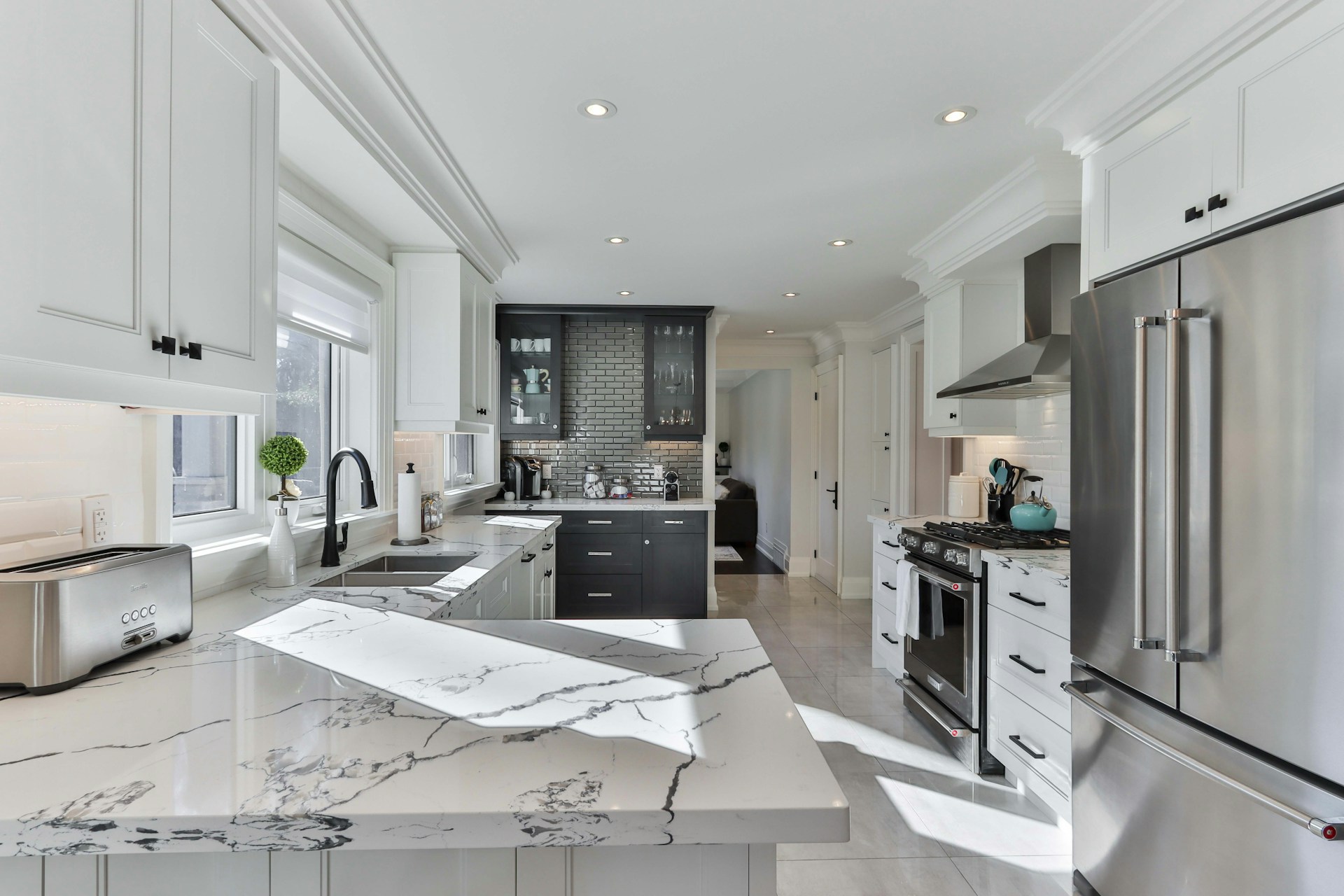
White cabinets can create a bright kitchen with a consistent background. Meanwhile, dark granite veins introduce contrast. However, the cabinet white should complement the stone’s background color. A cool white cabinet may look different beside a warm cream granite slab.
Black Cabinets
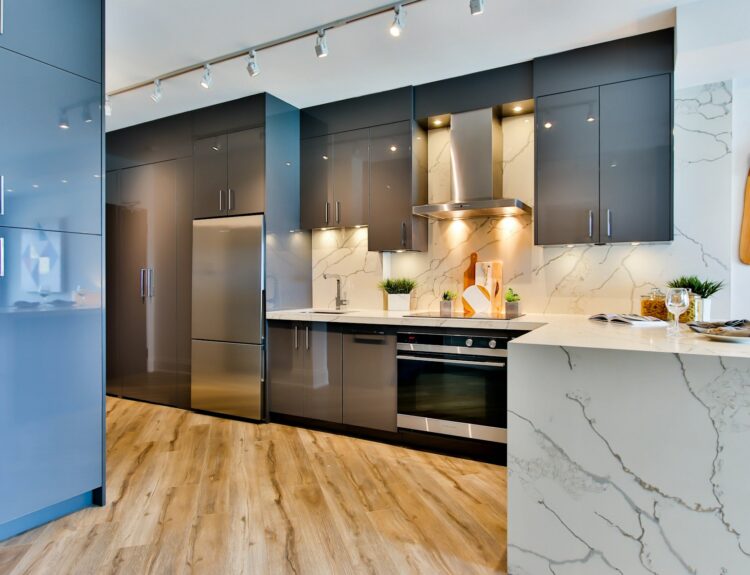
Black cabinets can create a dramatic appearance beside white granite. However, a kitchen with limited natural light may feel darker when too many large surfaces use black. We should balance the combination with suitable wall colors and lighting.
Natural Wood Cabinets
Wood cabinets introduce warmth. Therefore, they can soften the contrast between white stone and black veining.
However, the wood tone should complement any warm or cool minerals in the slab.
Consider Shaker Cabinets for a Balanced Appearance
Simple framed cabinet doors can provide enough detail without competing with the stone. Choosing Shaker kitchen cabinets can help create a balanced design around distinctive granite patterns. However, we should compare door finishes, hardware, and countertop samples together before deciding.
White Shaker Cabinet Combinations
White Shaker cabinets can create a timeless appearance with patterned granite. However, a matching white tone matters. We should compare painted cabinet samples with the stone under the kitchen’s actual lighting.
Gray Shaker Cabinets
Gray cabinets may complement black and gray veins. However, some gray finishes contain cool blue or warm brown undertones. We should check whether those tones work with the selected granite.
Wood-Finish Shaker Cabinets
Wood-finish Shaker cabinets can introduce natural warmth beside white stone. Meanwhile, black hardware may connect with the darker veins. However, too many contrasting finishes can make the design feel busy. A limited palette often works better.
Choose a Backsplash That Supports the Stone
A backsplash occupies a large visible area behind the countertop. Therefore, its pattern should complement the granite. However, homeowners sometimes choose decorative tile before seeing the full stone slab. This can create competing patterns.
Simple Subway Tile
A simple tile can provide a clean background for bold granite. It also works with several cabinet styles. However, grout color affects the final appearance. We should compare a complete tile and grout sample.
Full-Height Stone Backsplash
Using matching stone behind the countertop can create a continuous appearance. However, this approach may require more material and careful pattern planning. We should discuss slab availability and fabrication costs before deciding.
Textured Backsplash Materials
Subtle texture can introduce visual interest without adding strong patterns. However, grout and surface maintenance should influence the choice. We should consider both appearance and daily cleaning.
Select Hardware and Fixtures
Cabinet handles, faucets, and lighting fixtures can connect the design elements. However, matching every metal finish exactly is not always necessary. Black hardware may reflect the granite’s dark veining. Meanwhile, brushed metal finishes can create a softer appearance.
Choose a Consistent Direction
We should decide whether the kitchen will emphasize black, brushed nickel, or warm metal accents. Then, we can repeat selected finishes in suitable places. However, using too many unrelated finishes may create visual confusion.
Understand Practical Granite Maintenance
Granite generally handles everyday kitchen use well. However, natural stone characteristics vary by slab. Some granite may require sealing to help reduce liquid absorption. Therefore, we should ask about the selected material’s maintenance requirements.
Keep the Surface Clean
We should use suitable cleaners and wipe spills promptly. However, harsh or abrasive chemicals may damage some finishes or sealers. Following material-specific care guidance can help maintain the surface.
Protect the Edges
Countertop edges may chip after strong impacts. Therefore, we should avoid striking corners with heavy cookware. An eased or rounded edge may suit households that prefer simpler profiles.
Plan Slab Placement and Fabrication
A striking granite pattern deserves careful placement. However, large countertops may need more than one slab section. We should discuss seams, island orientation, and cutout locations before fabrication.
Consider the Island as a Focal Point
A kitchen island can display the stone’s natural movement. However, the slab size and available material influence the finished arrangement. We should review the cutting plan with the fabricator.
Review Sink Cutouts
Sink openings interrupt the countertop pattern. Therefore, their location can affect how the veins appear. We should finalize sink dimensions before cutting begins.
Budget for the Complete Kitchen Look
Granite pricing depends on slab selection, size, fabrication, and installation. However, the cost of cabinets, backsplash tile, and other finishes also affects the complete design budget. For homeowners in Columbus, Ohio, United States, comparing physical samples before ordering can help avoid expensive changes. We should prioritize a coordinated result rather than buying separate materials that look attractive individually.
Final Thoughts
White granite with black veins can give a kitchen a distinctive appearance while supporting many design styles. However, successful combinations depend on careful choices involving cabinets, backsplash materials, hardware, and lighting. For projects in Columbus, Ohio, United States, we should examine actual granite slabs and compare them with the room’s other finishes before committing. A balanced design can make the countertop a strong focal point without overwhelming the kitchen.
FAQs
1. What cabinet colors go best with white granite with black veins?
White, black, gray, and natural wood cabinets complement white granite with black veins. White cabinets create a bright, coordinated appearance, while black cabinets add dramatic contrast. Natural wood introduces warmth and balances the stone’s bold patterns.
2. Is white granite with black veins suitable for modern kitchens?
Yes, white granite with black veins works well in modern, transitional, and traditional kitchens. Its natural patterns add visual interest, while flat-panel or Shaker cabinets, simple backsplashes, and coordinated hardware help maintain a balanced design.
3. Does white granite with black veins require regular maintenance?
White granite with black veins generally requires routine cleaning with suitable stone-safe products. Some slabs may need periodic sealing depending on their porosity and finish. Wiping spills promptly and protecting countertop edges can help maintain their appearance and condition.