Ellen Editorial Team
Quick answer: Choosing a window replacement company means evaluating licensing, insurance, manufacturer certifications, and customer reviews, then comparing at least three in-home quotes for pricing, materials, and warranty terms. The right choice balances upfront cost with long-term energy savings and installation quality.
Replacing your windows is one of the biggest home improvement decisions you’ll make. The company you hire affects your comfort, your energy bills, and even your home’s resale value for years to come. Yet many homeowners feel stuck scrolling through endless search results, unsure what separates a trustworthy installer from one that cuts corners.
Add in the challenge of weighing cost against quality and energy performance, and the decision gets even harder. This guide breaks down what a window replacement company actually does, why energy efficient windows matter, how to vet installers, and how to find a trusted “replacement windows near me” provider in your area.
What Does a Window Replacement Company Do?
A window replacement company handles the entire process from start to finish. That typically starts with an in-home consultation and measurement, followed by material selection, installation, and post-install support like warranty service and touch-ups.
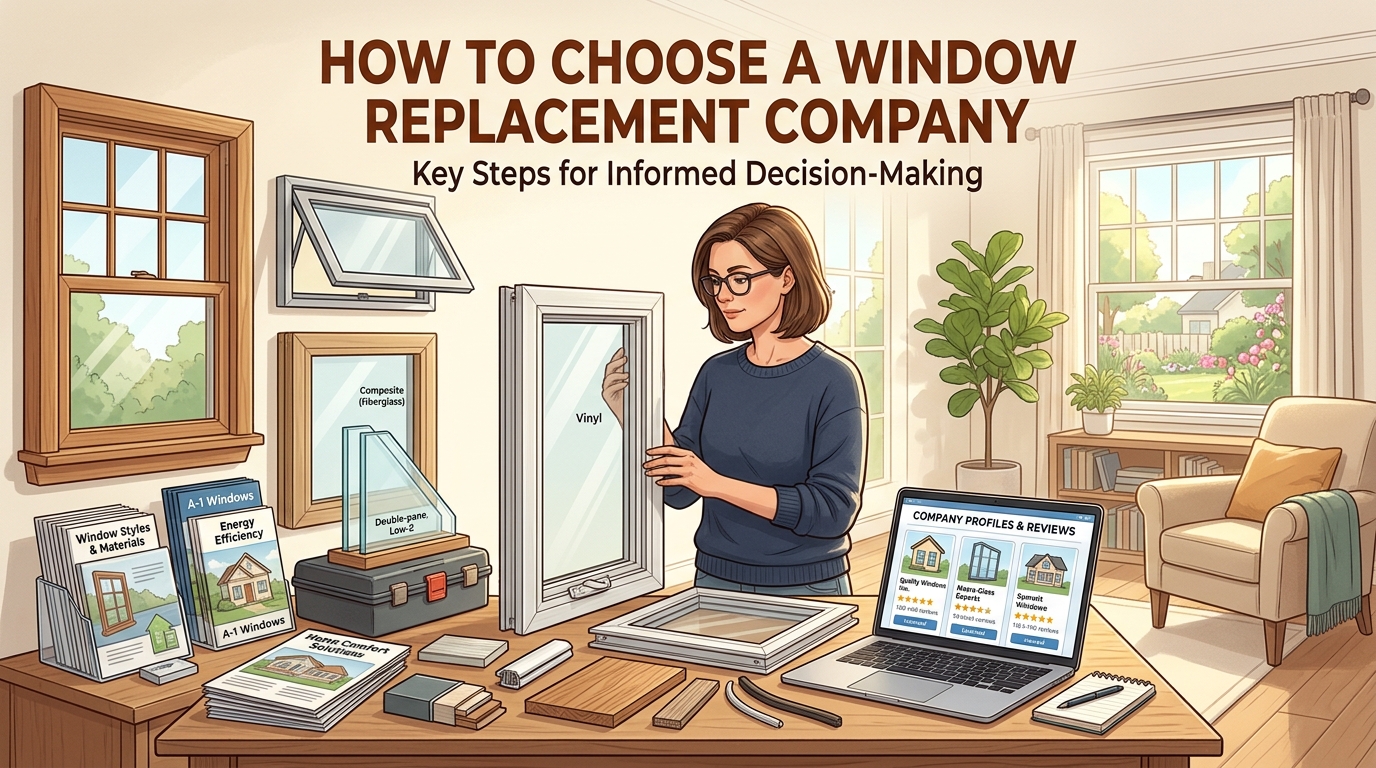
Most companies offer several window materials, including vinyl, wood, and fiberglass. Vinyl tends to be the most budget-friendly and low-maintenance option, wood offers classic style but requires more upkeep, and fiberglass splits the difference with durability and energy performance. A good installer will walk you through these trade-offs based on your home’s climate and architecture.
Warranties matter just as much as the installation itself. Ask whether the warranty covers both the product and the labor, and for how long. A window replacement company that stands behind its work will offer clear, written guarantees rather than vague promises.
The Benefits of Energy Efficient Windows
Energy efficient windows can meaningfully lower your heating and cooling costs. According to ENERGY STAR, replacing single-pane windows with ENERGY STAR certified models can save homeowners an average of $366 to $600 per year on energy bills, depending on climate and existing windows (ENERGY STAR, 2023).
When evaluating windows, look for double or triple glazing, Low-E (low-emissivity) coatings that reflect heat while letting light in, and gas fills like argon or krypton between panes for added insulation. Together, these features reduce how hard your HVAC system has to work.
There’s an environmental upside too. Lower energy consumption means a smaller carbon footprint, which makes energy efficient windows a practical choice for homeowners who care about sustainability as well as savings. One homeowner in Minnesota, for example, reported cutting their winter heating bill by nearly 20% after replacing drafty single-pane windows with triple-glazed, Low-E models.
How to Choose the Right Home Window Installation Service
Not all installers are created equal. Before hiring a home window installation service, confirm that the company is licensed, insured, and certified by major window manufacturers. These credentials signal accountability and proper training.
Check online reviews on Google, Yelp, and the Better Business Bureau to see how the company handles both successful jobs and complaints. Then request quotes from at least three providers. Compare not just price, but materials offered, warranty length, and realistic installation timelines.
Watch for red flags. High-pressure sales tactics, “today-only” discounts, and a reluctance to provide a written contract are all signs to walk away. A reputable home window installation service will give you time to decide and document every detail in writing.
Finding a Trusted “Replacement Windows Near Me”
How Do You Research Local Window Companies?
Start with Google Business Profiles and Better Business Bureau ratings to see verified reviews and complaint histories. Local community forums and neighborhood social media groups can also surface honest feedback. Don’t overlook word of mouth: asking neighbors or local contractors for referrals often leads to reliable, vetted recommendations.
What Questions Should You Ask Before Hiring?
Before signing anything, ask:
- What’s included in the warranty, and for how long?
- Do you handle permits and inspections?
- What’s the expected installation timeline?
- Are your installers employees or subcontractors?
Schedule in-home estimates from at least three providers so you can compare answers side by side.
What Should You Know About Pricing and Financing?
Window replacement costs vary widely based on material, size, and home location, but homeowners typically pay between $300 and $1,200 per window installed. Many companies offer financing options, including 0% interest plans or assistance applying for energy rebate programs, which can make higher-efficiency windows more accessible upfront.
Make the Right Choice for Your Home
Choosing a window replacement company comes down to three things: proven expertise, genuine energy efficiency, and transparent pricing. Companies that check all three boxes tend to deliver better results and fewer surprises.
Before committing, request quotes from a few local providers and compare them side by side. Consider downloading a window replacement cost checklist or subscribing to a home improvement newsletter to keep learning as you plan your project.
Frequently Asked Questions
How much does window replacement typically cost?
Most homeowners pay between $300 and $1,200 per window, depending on material, size, and labor costs in their area.
How long does window replacement take?
A standard home window installation service can usually complete a full-home project in one to three days, though larger homes or custom orders may take longer.
What’s the risk of choosing the cheapest quote?
The lowest bid may skip proper insulation, use lower-grade materials, or come from an uninsured installer, leading to higher costs down the line from leaks or poor energy performance.
Are there alternatives to full window replacement?
Homeowners on a budget can consider window repairs, adding storm windows, or replacing only the most drafty windows first rather than the entire home at once.
Who should prioritize energy efficient windows?
Homeowners in extreme climates, or those planning to stay in their home long-term, benefit most from the upfront investment in double or triple-glazed, Low-E windows.